
Is There a Case to Be Made for Abandoning Traction During Scoliosis Surgery?
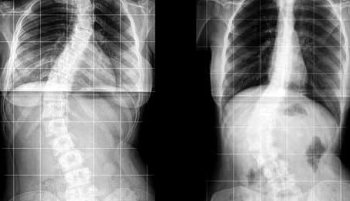
New research from Children’s Hospital Los Angeles (CHLA) is challenging the use of traction during spinal fusion surgery, demonstrating that although the practice is safe, it does not improve curve correction or pelvic obliquity in patients with neuromuscular scoliosis.
The findings contradict earlier reports suggesting intraoperative traction has benefits. Michael Heffernan, MD, a pediatric spine surgeon in the Jackie and Gene Autry Orthopedic Center at CHLA, led the study and presented the results at the Scoliosis Research Society’s recent annual meeting.
RELATED: Register for the Selby Spine Conference, February 4-7, 2026, in Park City, Utah
Surgeons at CHLA perform more than 250 spine procedures each year and have deep expertise in neuromuscular scoliosis, a common condition in non-ambulatory patients with cerebral palsy that can lead to severe curves over 90 or 100 degrees.
“Based on this study, I don’t see much of a role for intraoperative traction, except in rare instances or perhaps as a positioning device,” Dr. Heffernan said. “It has changed how I approach these cases.”
Study Design and Results
For the study, researchers compared 62 patients who underwent spinal fusion at CHLA: 31 with intraoperative traction and 31 without.
Unlike prior studies, patients were carefully matched by age, curve size, flexibility, and pelvic alignment, with both groups starting at an average preoperative curve of 88 degrees.
The outcomes between the 2 groups were strikingly similar:
- The average postoperative curve was 37 degrees with traction versus 42 without, a statistically insignificant difference.
- Pelvic obliquity correction was also comparable: The postoperative pelvic obliquity was identical at 4 degrees in both groups.
- Surgery time was slightly longer in the traction group, but complication rates were equivalent.
Halo Traction a Better Option
The idea behind traction is to allow the spine to better tolerate large corrections. But Dr. Heffernan noted that intraoperative traction is missing a key ingredient: time.
“Traction plus time is the equation for success,” he said. “If we’re lacking the key element of time, we’re not going to be as successful.”
For patients with severe curves, he recommends halo gravity traction before surgery instead. In this approach, patients’ spines are slowly straightened in traction for several weeks before undergoing spinal fusion.
“My algorithm now is that if a curve is bad enough that a patient needs traction, then I want to do halo gravity traction,” he said.
Dr. Heffernan next wants to investigate whether intraoperative traction leads to more neuromonitoring alerts during surgery. This study did not show an increase, but the team plans to examine it in a larger group of patients.
The Case for Earlier Referral
The results also underscore the importance of early referral for neuromuscular scoliosis. Many patients are not evaluated until curves approach 100 to 150 degrees.
A 2024 CHLA study, also led by Dr. Heffernan, found that these larger curves require more resources and result in less correction. [1]
“The ultimate goal is to start conversations about surgery when curves are easily manageable, around 50 to 60 degrees,” Dr. Heffernan said. “That would avoid the need for traction and give patients the best correction and quality of life.”
Reference
- Yoshida B, Valenzuela-Moss JN, Tetreault TA, et al. What happens when you wait? Larger curves require more resources for less correction in neuromuscular scoliosis. Spine (Phila Pa 1976). 2025 May 5. doi: 10.1097/BRS.0000000000005380. Online ahead of print.